Wednesday, January 26, 2022

A 75-year-old woman presents with a chief complaint of cough while eating

 A 75-year-old woman with a history of diabetes mellitus, hypertension, hyperlipidemia, and peripheral artery disease presents with a chief complaint of cough while eating. On further history, she describes trouble initiating her swallow as well as recent dysarthria.

Which of the following is the most likely cause of her symptoms?

A. Achalasia

B. Esophageal web

C. Stroke

D. Zenker diverticulum

Answer:

A 75-year-old woman with a 50-pack-year history of cigarette smoking presents to her primary care physician (PCP) with 10 years of progressive dyspnea on exertion


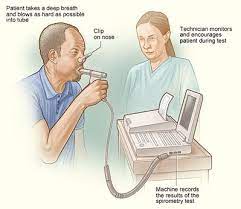
A 75-year-old woman with a 50-pack-year history of cigarette smoking presents to her primary care physician (PCP) with 10 years of progressive dyspnea on exertion. She notes episodic wheezing and experiences a “chest cold” about two times per year. Her examination reveals distant breath sounds to auscultation and hyper-resonant chest to percussion, with otherwise unremarkable examination. A CXR demonstrates hyperinflation with flattening of the bilateral hemidiaphragms. Pulmonary function tests (PFTs) reveal a forced expiratory volume (FEV1) of 50% predicted, forced vital capacity (FVC) of 70% predicted, and FEV1/FVC of 0.50. There is no response to bronchodilator.

What pattern best describes her PFT results?

A. Cannot determine without more information

B. Normal

C. Obstructive

D. Restrictive

Answer:

Tuesday, January 25, 2022

A 75-year-old man with a history of hypertension and peptic ulcer disease presents with dyspnea on exertion

 A 75-year-old man with a history of hypertension and peptic ulcer disease presents with dyspnea on exertion to the emergency department (ED). He notes black-colored stools for the past 2 weeks. His initial examination is notable for conjunctival pallor, clear lung fields without rales, wheezing, or rhonchi, as well as tachycardia with a regular rhythm, normal s1 and s2, and without murmurs, rubs, or gallops. Initial laboratory workup reveals a hemoglobin of 5.5 g/dL, reduced from a baseline of 12 g/dL on routine outpatient laboratory testing from 3 months prior. His basic metabolic panel, arterial blood gas (ABG), and lactateare all within normal limits. A chest radiograph (CXR) is normal.

What is the mechanism of this man’s dyspnea on exertion?

A. Decreased cardiac output

B. Decreased oxygen delivery

C. Decreased systemic vascular resistance

D. High-output heart failure

E. Pulmonary edema

Answer:

Wednesday, January 19, 2022

A 59-year-old man with a history of hypertension and hyperlipidemia presents with 1 hour of substernal chest pressure

 A 59-year-old man with a history of hypertension and hyperlipidemia presents with 1 hour of substernal chest pressure rated an 8 on a scale of 1 to 10 with radiation down the left arm and associated with diaphoresis. Initial vital signs are notable for a blood pressure (BP) of 92/64 mmHg and a heart rate (HR) of 92 beats/min. His electrocardiogram (ECG) is shown below


What is the most likely diagnosis?

A. Anterior ST-elevation myocardial infarction

B. Inferior ST-elevation myocardial infarction

C. Pericarditis

D. ST changes not meeting specific ischemia criteria; additional ECGs should be obtained.


ANSWER: 

Friday, July 27, 2018

A 13 year old girl with history of lethargy, joint pain and cough....


A 13 years old girl presented to accident and emergency department with a history of lethargy, joint pain and cough. Both of her parents are from Jamaica. Her problem started one month ago with an upper respiratory infection. She was seen by her family doctor and diagnosed to have a viral infection. She has a past history of skin rashes that was never seen by her family doctor.
On examination she has a palpable cervical lymph nodes of various sizes, a congested throat, generalized myalgia and a swollen ankle joint on the left side.
Her BP is 120/75 mmHg, HR 90 bmp, RR 22/min.
A urine test shows protein+ve with red cells.
other tests are as follows:
Hb = 9.7 g/dl
TLC = 4x10⁻⁹/l with neutrophils and lymphopenia.
Platelets =100x10-9/l
Retic count = 2.6%
CRP = 20

Questions:
1. Which three other investigations should be carried out?
2. What treatments should you prescribe?
3. What are three possible differential diagnosis?

Answers:

Saturday, March 24, 2018

Anorexia And Fever - Case Study


A 22-year-old man presented with malaise and anorexia for 1 week. He vomited on one occasion, with no blood. He has felt feverish but has not taken his temperature. For 2 weeks he has had aching pains in the knees, elbows and wrists without any obvious swelling of the joints.
He has not noticed any change in his urine or bowels.
Five years ago he had glandular fever confirmed serologically. He smokes 25 cigarettes per day and drinks 20–40 units of alcohol per week. He has taken marijuana and ecstasy occasionally over the past 2 years and various tablets and mixtures at clubs without being sure of the constituents. He denies any intravenous drug use. He has had irregular homosexual contacts but says that he has always used protection. He claims to have had an HIV test that was negative 6 months earlier. He has not traveled abroad in the last 2 years.
He is unemployed and lives in a flat with three other people. There is no relevant family history.

Examination
He has a temperature of 38.6°C and looks unwell. He looks as if he may be a little jaundiced. He is a little tender in the right upper quadrant of the abdomen. There are no abnormalities to find on examination of the joints or in any other system.

Investigations
(normal values shown in brackets)
Haemoglobin 14.1 g/dL (13.3–17.7 g/dL)
Mean corpuscular volume (MCV) 85 fL (80–99 fL)
White cell count 11.5 × 10⁹/L (3.9–10.6 × 10⁹/L)
Platelets 286 × 109/L (150–440 × 109/L)
Prothrombin time 17 s (10–14 s)
Sodium 135 mmol/L (135–145 mmol/L)
Potassium 3.5 mmol/L (3.5–5.0 mmol/L)
Urea 3.2 mmol/L (2.5–6.7 mmol/L)
Creatinine 64 μmol/L (70–120 μmol/L)
Bilirubin 50 mmol/L (3–17 mmol/L)
Alkaline phosphatase 376 IU/L (30–300 IU/L)
Alanine aminotransferase 570 IU/L (5–35 IU/L)
Fasting glucose 4.1 mmol/L (4.0–6.0 mmol/L)

Questions
• What is your interpretation of the findings?
• What is the likely diagnosis?
• What treatment is required?

Answers And Discussion

Tuesday, January 9, 2018

Approach to Patient Presenting with Numb toes - History and Examination


A middle aged man has developed numbness and tingling in his toes and feet, and more recently his fingertips. He also complains that he trips up more frequently.

Clinical Approach: This man has distal sensory symptoms and motor symptoms.  Here it is important to decide whether this is due to a peripheral cause ,  central or a combination of both.

Clinical History :
1. Is this an urgent case? Ask about the duration of symptoms and rate of progression.  Any worrying associated symptoms like loss of sphincter control or difficulty in breathing.

2. Differentiating between peripheral and central nervous system dysfunction:

A peripheral nervous system dysfunction is characterized by
  • tingling, numbness and burning in feet.  
  • Numb fingers. 
  • Foot drop
  • Difficulty in rising from a chair
  • Difficulty in going up and down stairs.  
A spinal cord lesion is characterized by
  • Legs and feet feeling stiff and heavy. 
  • Clumsy stiff hands
  • Sphincter disturbances. 
3. Duration of symptoms may help determine the cause of neuropathy.  

4. Any associated pain.

Past History: Ask specifically about:
  • Diabetes mellitus 
  • Alcohol intake 
  • Current medications
  • Dietary history 
  • Pernicious anemia 
  • Hypothyroidism 
  • Weight loss 
  • Smoking 
  • Neck trauma 
  • Rheumatoid arthritis. 
Clinical Examination: 
1. Signs in case of peripheral nervous system disorder 
  • Distal weakness 
  • Absent ankle reflexes
  • Stocking distribution sensory loss
  • Muscle wasting (if severe) 
2. Signs in case of central nervous system disorder 
  • Spastic tone
  • Weakness both proximal and dismally, but predominantly in leg flexor
  • Brisk reflexes 
  • Extensor plantars
  • Possible sensory level 

3. Is is important to check if the signs are symmetrical?

  • Asymmetry in the context of an upper motor neurone syndrome would represent a Brown-Sequard syndrome with loss of proprioception ispilateral to the weak leg, and loss of pain and temperature sensation contralateral to the weak leg. 
  • Asymmetric lower motor neurone findings suggest mononeuritis multiplex or entrapment neuropathic..
4. Check for associated cranial nerve pansies
  • Deafness in CN VIII
  • Bilateral facial weakness in Guillain-Barre syndrome and Sarcoidosis 
  • Malignant infiltration of the basal meninges may lead to multiple cranial nerve palsies. 
5. General Examination :
Look and check if the patient is systemically well? 
  • Cachexia may suggest malignancy or alcoholism 
  • Vasculitic rash in systemic vasculitis 
  • Look for signs of hypothyroidism 
  • Check 

Monday, November 27, 2017

Nausea And Weight Loss In A 45 Year old Alcoholic... Case Study


A 45 years old man consults his general practitioner (GP) with a 6-month history of reduced appetite
and a weight loss, from 78 to 71 kg. During the last 3 months he has had intermittent nausea, especially in the mornings, and in the last 3 months the morning nausea has been accompanied by vomiting on several occasions. For 1 month he has noted swelling of his ankles. Despite his weight loss he has recently noticed his trousers getting tighter. He has had no abdominal pain. He has no relevant past history and knows no family history as he was adopted.
He takes no medication. From the age of 18 he has smoked 5–6 cigarettes daily and drunk 15–20 units of alcohol per week. He has been a chef all his working life, without exception in fashionable restaurants. He now lives alone as his wife left him 1 year ago.

Examination
He has plethoric features. There is pitting oedema of his ankles. He appears to have lost weight from his limbs, but not his trunk. He has nine spider naevi on his upper trunk.
His pulse is normal, and the rate is 92/min. His jugular venous pressure (JVP) is not raised, and his blood pressure is 146/84 mmHg.
The cardiovascular and respiratory systems are normal.
The abdomen is distended. He has no palpable masses, but there is shifting dullness and a fluid thrill

Investigations: 
Haemoglobin = 12.6 g/dL (normal = 13.3–17.7 g/dL)
White cell count = 10.2 × 10⁹/L (normal = 3.9–10.6 × 10⁹/L)
Platelets = 121 × 109/L (normal = 150–440 × 109/L)
Sodium = 131 mmol/L (normal = 135–145 mmol/L)
Potassium = 4.2 mmol/L(normal = 3.5–5.0 mmol/L)
Urea = 2.2 mmol/L (normal = 2.5–6.7 mmol/L)
Creatinine  = 101 μmol/L (normal = 70–120 μmol/L)
Total protein = 48 g/L (normal = 60–80 g/L)
Albumin = 26 g/L (normal = 35–50 g/L)
Bilirubin =  25 mmol/L (normal = 3–17 mmol/L)
Alanine transaminase = 276 IU/L (normal = 5–35 IU/L)
Gamma-glutamyl transaminase = 873 IU/L (normal = 11–51 IU/L)
Alkaline phosphatase = 351 IU/L (normal = 30–300 IU/L)
International normalised ratio (INR) = 1.4 (normal = 0.9–1.2)

Urinalysis: no protein; no blood

• What is the diagnosis?
• How would you manage this patient?

Thursday, September 28, 2017

Regarding Rotator Cuff Injury...


A 23-year-old man presents following a fall onto his left shoulder whilst playing rugby. He complains of pain throughout the shoulder and on examination has weakness when testing internal rotation of the arm compared to the contralateral side.
Radiographs are negative.

Injury to which tendon would explain his symptoms?
A Deltoid
B Infraspinatus
C Subscapularis
D Supraspinatus
E Teres minor

Answer:

A first-time mother brings in her 5-day-old baby for a well-child visit....


A first-time mother brings in her 5-day-old baby for a well-child visit. The nurse weighs the infant and reports a weight of 7 lb 5 oz to the mother. The mother looks concerned and tells the nurse that her baby weighed 7 lb 10 oz when she was discharged 4 days ago.

The nurse’s best response to the mother is:
A. “I will let the doctor know, and he will talk with you about possible causes of your infant’s weight loss.”
B. “A weight loss of a few ounces is common among newborns, especially for breastfeeding mothers.”
C. “I can tell you are a first-time mother. Don’t worry; we will find out why she is losing weight.”
D. “Maybe she isn’t getting enough milk. How often are you breastfeeding her?”

Answer:

Wednesday, September 27, 2017

A 40 Year old patient presenting with nausea, vomiting and abnormal liver function tests...


A 40-year-old school teacher develops nausea and vomiting at the beginning of the fall semester. Over the summer she had taught preschool children in a small town in Mexico. She is sexually active, but has not used intravenous drugs and has not received blood products.
Physical examination reveals scleral icterus, right upper quadrant tenderness, and a palpable liver. Liver function tests show aspartate aminotransferase of 750 U/L (normal < 40) and alanineaminotransferase of 1020 U/L (normal < 45). The bilirubin is 13 mg/dL (normal < 1.4) and the alkaline phosphatase is normal.

What further diagnostic test is most likely to be helpful?
a. Liver biopsy
b. Abdominal ultrasound
c. IgM antibody to hepatitis A
d. Antibody to hepatitis B surface antigen
e. Determination of hepatitis C RNA

Answer:

Monday, September 25, 2017

Aortic Regurgitation - History, Examination And Study Questions & Answers


Clinical History
· Patients may be asymptomatic (but may have normal or depressed left ventricular function).
· Dyspnoea and fatigue (due to left ventricular impairment and low cardiac output initially on exertion).
· Symptoms of left ventricular failure in later stages.
· Angina pectoris is less common than in aortic stenosis; it usually indicates coronary artery disease.

Examination

1. Pulse
· Collapsing pulse (large volume, rapid fall with low diastolic pressure).
· Visible carotid pulsation in neck (dancing carotids or Corrigan's sign).
· Capillary pulsation in fingernails (Quincke's sign).
· A booming sound heard over femorals ('pistol-shot' femorals or Traube's sign).
· To and fro systolic and diastolic murmur produced by compression of femorals by stethoscope
(Duroziez's sign or murmur).

2. Heart

· Heart sounds are usually normal.
· Apex beat is displaced outwards and is forceful.
· Third heart sound (in early systole with bicuspid aortic valve).
· Early diastolic, high-pitched murmur is heard at the left sternal edge with the diaphragm - if not
readily apparent, it is important to sit the patient forward and auscultate with the patient's breath held
at the end of expiration. When the ascending aorta is dilated and displaced to the right, the murmur
may be heard along the right sternal border as well.
· An ejection systolic murmur may be heard at the base of the heart in severe aortic regurgitation
(without aortic stenosis). This murmur may be as loud as grade 5 or 6, and underlying organic stenosis can be ruled out only by investigations.
· Ejection click suggests underlying bicuspid aortic valve.
· Mid-diastolic murmur of Austin Flint may be heard at the apex. It is typically low-pitched, similar to the murmur of mitral stenosis but without a preceding opening snap.
· Loud pulmonary component of second sound (suggests pulmonary hypertension).

3. General examination
· Head nodding in time with the heart beat (de Musset's sign) may be present.
· Visible carotid pulsation may be obvious in the neck - dancing carotids or Corrigan's sign.
· Check the blood pressure (wide pulse pressure).
· Look for systolic pulsations of the uvula (Muller's sign).
· Check pupils for Argyll Robertson pupil of syphilis.
· Look for stigmata of Marfan's syndrome - high arched palate, arm span greater than height.
· Check joints for ankylosing spondylitis and rheumatoid arthritis.

QUESTIONS

Splenomegaly - Case Study


This man presents with tiredness and lethargy. Please examine his abdominal system and discuss your
diagnosis.

Clinical signs To Look For: 

General

• Anaemia
• Lymphadenopathy (axillae, cervical and inguinal areas)
• Purpura

Abdominal
• Left upper quadrant mass that moves inferomedially with respiration, has a notch, is dull to percussion and you cannot get above nor ballot
• Estimate size
• Check for hepatomegaly

Underlying cause
  • Lymphadenopathy
  • Haematological and Infective
  • Stigmata of chronic liver disease 
  • Cirrhosis with portal hypertension
  • Splinter haemorrhages, murmur, etc. 
  • Bacterial endocarditis
  • Rheumatoid hands 
  • Felty’s syndrome
Discussion

Causes Of Splenomegaly

Thursday, September 21, 2017

A 26-year-old G1P0 woman at 39 weeks’ gestation is admitted to the hospital in labor.


A 26-year-old G1P0 woman at 39 weeks’ gestation is admitted to the hospital in labor. She is noted to have uterine contractions every 7 to 10 minutes. Her antepartum history is significant for a nonimmune rubella status.
On examination, her blood pressure (BP) is 110/70 mm Hg and heart rate (HR) is 80 beats per minute
(bpm). The estimated fetal weight is 7 lbs.
On pelvic examination, she has been noted to have a change in cervical examinations from 4-cm dilation to 7 cm over the last 2 hours. The pelvis is assessed to be adequate on digital examination.

What is your next step in the management of this patient?

Next step in Management: Continue to observe the labor.

Learning Objectives In this Case

1. Know the normal labor parameters in the latent and active phase for nulliparous and multiparous patients.
2. Be familiar with the management of common labor abnormalities and know that normal labor does not require intervention.
3. Know that rubella vaccination, as a live-attenuated preparation, should not beadministered during pregnancy.

Case Discussion:

Sunday, July 30, 2017

A 24-year-old woman has acute renal failure following postpartum hemorrhage...


A 24-year-old woman has acute renal failure following postpartum hemorrhage. Laboratory studies showed
serum glucose, 150 mg/dL;
sodium, 135 mEq/L;
potassium, 6.5 mEq/L;
chloride, 105 mEq/L; and
bicarbonate, 15 mEq/L.
Therapy should include which of the following?
(A) Decrease potassium chloride to 10 mEq/L
(B) Intravenous 0.9% sodium chloride
(C) 100 mL of 50% glucose water with 10 U insulin
(D) Intravenous calcitonin
(E) Intravenous magnesium sulfate

Answer:

Regarding Child's Developmental Milestones...


A child is brought to your clinic for a routine examination. She can put on a T-shirt but requires a bit of help dressing otherwise. She can copy a circle well but has difficulty in copying a square. Her speech is understandable and she knows four colors. She balances proudly on each foot for 2 seconds but is unable to hold the stance for 5 seconds.

Which of the following is the most likely age of this child?
a. 1 year
b. 2 years
c. 3 years
d. 4 years
e. 5 years

Answer:

Which one of the following people should be offered the annual injectable influenza vaccine?


Which one of the following people should be offered the annual injectable influenza vaccine?
A. A 57-year-old man who had a stroke 15 years ago
B. A 55-year-old hypertensive man who has no complications from his condition
C. A 50-year-old woman with Crohn's disease
D. A 23-year-old man who has asthma. He describes his condition as 'mild' and only uses a salbutamol inhaler
E. A 51-year-old woman with hypothyroidism on thyroxine

Answer:

Friday, July 28, 2017

Diabetes In Pregnancy - Study Questions & Answers


A 30 year old woman with diabetes mellitus presents to her physician  at 19 weeks’ gestation. She is obese and did not realize that she was pregnant until recently. She also has not been “watching her sugar” lately, but is now motivated to improve her regimen. 
A dilated ophthalmologic examination shows no retinopathy. An ECG is normal.
Urinalysis is negative for proteinuria. 
Laboratory studies show:
• HbA1c : 10.8%
• Glucose : 22 mg/dl
• TSH : 1.0 microU/ml
• Free thyroxine: 1.7 ng/dL
• Creatinine: 1.1 mg/dL.

Question: Which of the following condition has the same risk of developing in diabetics as the general population.
a. Asymptomatic bacteriuria
b. Preeclampsia
c. Congenital adrenal hyperplasia
d. PPH after delivery
e. Shoulder dystocia

Answer: c. Congenital adrenal hyperplasia

Question:  A 30-yrs-old G3P2 patient visits an antenatal clinic at 20 weeks. She reveals during history that her first baby was 4.6 kg delivered by cesarean section, second baby was 4,8 kg delivered by c/section. Gynaecologists suspects gestational diabetes and orders a Glucose tolerance test. The blood sugar levels after 50 gms of oral glucose are 206 mg/dl and the patient is thus confirmed as a case of gestational diabetes. 

Regarding the most common ECG finding of pulmonary embolism?

A 42-year-old man develops shortness of breath (SOB) and chest pain 7 days after an open cholecystectomy. His blood pressure is 145/86 mm Hg, pulse is 120/min, respiration 24/min, and oxygen saturation of 97%.  Pulmonary embolism is clinically suspected.

Which of the following is the most common ECG finding of pulmonary embolism?
(A) a deep S wave in lead I
(B) depressed ST segments in leads I and II
(C) prominent Q wave in lead I, and inversion of T wave in lead III
(D) sinus tachycardia
(E) clockwise rotation in the precordial leads

Answer: (D) sinus tachycardia

Discussion: Sinus tachycardia is the most common ECG finding in pulmonary embolism.


The specific ECG signs of pulmonary embolism such as the S1, Q3, T3 are rarely seen except in cases of massive pulmonary embolism.
In submassive pulmonary emboli, the ECG may show nonspecific ST changes and sinus tachycardia.
On occasion, pulmonary embolism can precipitate atrial flutter or fibrillation.

Friday, July 21, 2017

Regarding Hypersensitivity Reactions...


A 20-year-old woman had her ears pierced when she was 16 years old. Since that time, she has had only two pairs of earrings, both given to her by her parents; both were 18 karat gold. Last week her
21-year-old boyfriend gave her a new pair of earrings for Valentine’s Day, which she started to wear immediately. Three days later, she developed localized areas of erythema and vesicle formation where she had pierced her ears.

The mechanism responsible for this reaction most closely resembles which of the following?
(A) Type I hypersensitivity
(B) An Arthus reaction
(C) A positive purified protein derivative (PPD) skin reaction
(D) Antibody-dependent cell-mediated cytotoxicity
(E) An immune complex disease

Answer: